Showing posts with label professional. Show all posts

Wednesday, July 31, 2019

Life After ALT: 11 Skills ALTs Can Develop To Help You Land Your Next Job by David L. Hayter


by David L. Hayter

Bio: David L. Hayter worked as an Assistant Language Teacher (ALT) in Japan from 2014-2019. Although he primarily taught junior high school, he has taught all the grades from kindergarten through ninth grade. During his time as an ALT, he worked in 11 junior high schools, 2 elementary schools, dozens of kindergartens with hundreds of JTEs to teach thousands of students.

Aside from teaching classes in junior high school, his other duties included training and managing new ALTs, designing and delivering teacher training workshops, and performing other duties for his local Board of Education (BOE).

After his career as an ALT came to an end, he started working as a freelance writer and entrepreneur.


Outside of work, he actively volunteers in his community, enjoys playing video games, loves to cook, trains hard, podcasts, helps run the ALT Training Online blog and writes for his blog, Yokkaichi Connections.


For a lot of ALTs, our lives are only as good as our last contract. Although some ALTs have decided to make Japan their home, there are a lot of us who will, eventually, move on to another career in another country other than Japan.
There are too many stories of ALTs who spent years working in Japan only to struggle with finding work once their days as an ALT are numbered.
So many ALTs are caught up in the honeymoon of moving to Japan and starting to work that they often forget about what's going to come after.

When I first started blogging, it was to help new ALTs get more information. One of my first posts was what to do before coming to Japan. Last year, I wrote a blog post about 5 skills you can develop as an ALT to help with your future employment.

Since I just finished up my own stint as an ALT for 5 years, I figured it was a good time to revisit some of the skills I've learned while working as an ALT, volunteering in the community, and helping out with ALT Training Online. Maybe these are some skills that newer ALTs will want to pick up too!

Flexibility

Almost everyone knows the old ALT mantra of "ESID" (every situation is different). After teaching in a variety of schools with different teachers and students, I can say that it's very true. Each teacher has their own way of teaching. Every class has its own attitude, strengths, and weaknesses.
To be a successful ALT, you have to be adaptable and flexible. That means that you have to be able to look at the atmosphere in the class and adjust your teaching plan accordingly.
Sometimes your lessons may be too hard or too easy. You might be really excited about the content of your lesson and nobody else is. Something you thought was going to be really boring might end up being a big hit.
By watching reactions and changing things up, you'll be sure to have great lessons.
Time Management

When it comes to the daily schedule of the ALT, we sometimes can get a lot of downtime. If you're spending those free hours becoming a better teacher on alttrainingonline.com, then you're already many steps ahead of the game!
Depending on the school I was working in, I sometimes had too much free time or not enough. In either situation, the ability to manage my time effectively really helped me get a lot done.
By paying attention to what I needed to get done and how long it takes, I was able to plan out my day and make sure I handled everything I needed to without too much stress.

This skill is especially handy for anyone going into a management-related field. Let's face it, if you can't manage your own time, you definitely can't manage someone else's!

Planning Ahead

I have to admit that as a college student, I was the master of winging it. I would usually do just enough work to get what I needed to get done at the last possible moment. My work was still pretty good, but it would have been A LOT better (and less stressful for me) if I had gotten an early start and made a plan.
Similar to time management, planning ahead is an essential skill for ALTs, especially for projects and classes that will be taught in succession.
This can be tough for us though as a lot of what we teach can depend on teachers that may, or may not, know what they are doing for their next class.

Either way, if you take care of everything you're supposed to, you can't say that any problems that arise were caused by you.

Communication

This is perhaps one of the most important skills an ALT can develop. Since ALTs often work with other teachers, the ability to community clearly and in a short time are essential to getting a lot done in a short amount of time.

This can also be tough given the schedules of the JTEs and language abilities of ALTs and JTEs (this will become even more troublesome with the addition of elementary school teachers to the English teaching equation).
When it comes to having good communication as an ALT, it's important to start early, be proactive, and put the ball in the JTE's court.
If you don't communicate enough, you may seem uninterested or anti-social. If you try to talk with your JTE too much, you can come off as demanding or needy.
I would usually start with an email or a written note. If I didn't get a response, I'd just go talk to the teacher when I saw them around the school (it usually helps to start with small talk before you get to the business of lesson planning).
Whatever form of communication you use, it's important to be clear and succinct.
If you come from a place of supporting the JTE and the students, you'll really be appreciated by the school you are teaching in.

Collaboration
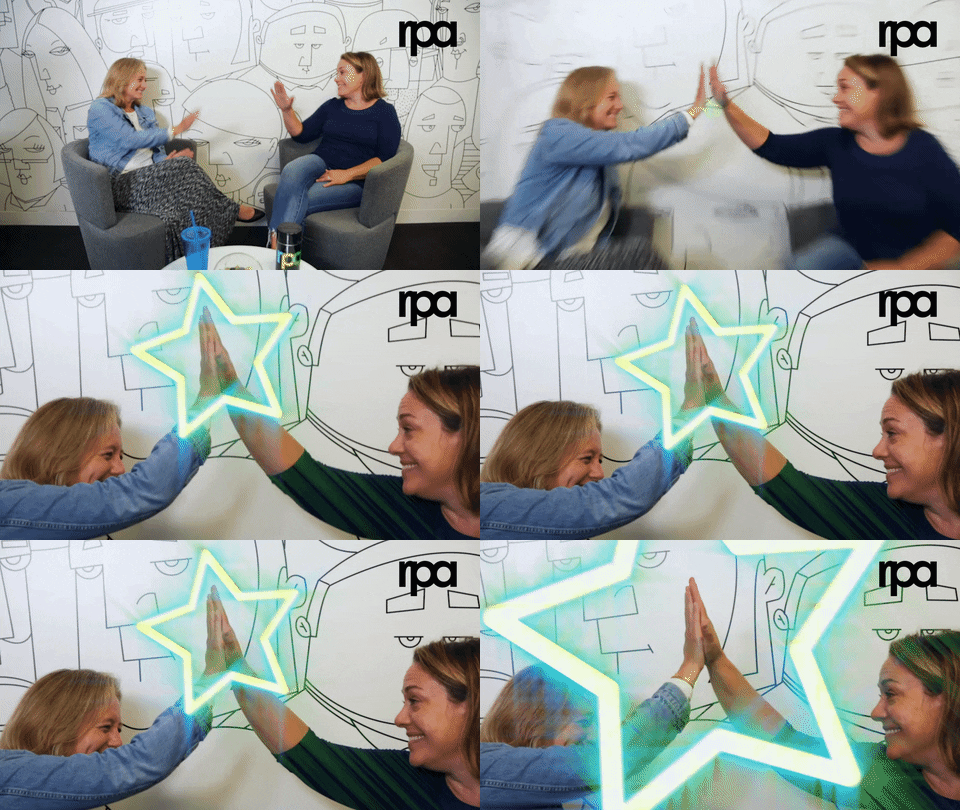
In ALT life, there are plenty of opportunities for collaboration. You can work with your JTEs and students in the school to complete projects that can't be done alone.
There is also a large community of ALTs out there working on all sorts of projects on-line and in professional groups
Aside from building your professional learning network, belonging to groups looks GREAT on your resume.
If you're looking for opportunities to work with some great ALTs while picking up some knowledge and skills along the way, be sure to check out these groups:
That's about all I could think of off the top of my head. Do you know about other groups? Let us know what they are in our Facebook group.

Social Media Marketing

A few years ago, I came across ALT Training Online while researching ALT training for some new ALTs we were getting in August. Little did I know that volunteering to proofread new modules for the course would turn into the opportunity to run the blog for the site and help with our social media promotion.
Social media marketing is becoming a very in-demand skill for a lot of companies. There are even more opportunities to work remotely and on a part-time basis for clients.
This can become a nice full-time gig or even a side hustle to help supplement your teaching income.

Graphic Design

Along with social media marketing, the rise of internet marketing and the sheer amount of content that's pumped out online every day has created a HUGE demand for eye-catching graphics and well-designed websites.
Most schools (hopefully) have access to a computer. There are a lot of free programs you can use to produce quality graphics for your lessons and other projects.
Whether it's making yourself Batman (like I've done numerous times) or creating a version of Momotaro where he pops out of a Cup Noodle (something I've done once), the students really get a kick out of seeing what you can do with a computer.
The same work you would put into making a worksheet for your class could easily be transferred into layout design for a magazine or poster.
Remember that Google is your friend. The answer for how to do anything you want on almost any program is only a search away!

Writing

Although most teachers want ALTs to focus on speaking and listening skills in our classes, a good writing class can really help your students increase their English ability.
By writing samples for your class, you have a chance to hone your writing abilities.
Don't get me wrong, the English you'll probably write for your students will be simple, but then that's the challenge!

Writing for companies that produce non-academic content can be very lucrative. You can also take a chance and try to get creative with some of your writing for class. If the students and teachers see what you can come up with, it might inspire them to go a little bit more out of the box than usual.

As an ALT, you can also get some experience blogging. I run this blog in addition to my other blog, Yokkaichi Connections.
Aside from building skills, the things your write online can help serve as a portfolio of your work and get you noticed by potential employers.
Translation/Interpretation

If you've got the Japanese skills, you can make a decent living doing translations for a variety of clients. When I was an ALT, my BOE would often have some documents from City Hall that needed to be translated. Those of us who would read Japanese would help translate forms and letters from Japanese to English and vice versa.
If you want to volunteer, there are also opportunities to work community groups that serve as local tour guides, help people who don't speak Japanese, and promote local attractions.
If you can build a reputation as a reliable translator/interpreter, you'll be able to open up doors that otherwise wouldn't be available to you.

Presentation

When you think about it, teaching something is pretty much giving a presentation (although it's hopefully a little more interactive and interesting than your usual college PowerPoint).
The way you speak, your volume, diction, vocabulary choice, pace, questions, and timing all really add up to either making a great experience or one that's lackluster.
If you can reflect on your performance and how you can improve, you'll become really good at presentations and super comfortable talking in front of crowds.

Web Design

This is another skill that people are willing to pay big bucks for. If you can make a slick website for a person or a company, you can find a lot of work.
Even if you plan on being a teacher, your ability to help out with the school's website may be the difference between your getting hired or someone else.
The days of having to be a coder to make a website are over (although it does help). Almost anyone can do it, but it takes practice to do it well.

If your school has a computer club, this is something else you can do together. You could even use making a website as a group project for your students if you have access to computers.


-          A note from ALT training online’s David Hayter


If you have something 'ALT' to write about that hasn't been covered in these blogs, email me at alttoblog@gmail.com so we can work together and spread your story.

Don't have any ideas? We have a list of topics to write about that need a writer. Email in your interest to write and we can set you up. 

For upcoming blogs see the blogs tab here:  http://www.alttrainingonline.com/blog.html

Wednesday, May 2, 2018

Kenshu for Me: My First Few Years in Japan by Jessie James Lucky

by Jessie James Lucky

This is the second part of a three part series.
Be sure to check out part one: What is Kenshu? Teacher Training in Japan

Bio: Jessie is an ALT from Portland, Oregon, USA. He got a certificate in TESL from Portland State University and worked as an adult educator as well as technical trainer for a national bank in the US before coming to Japan.


Jessie has lived in Japan for over 14 years and currently spends most of his time working at two schools in the Kumamoto area. He has a wealth of teaching experience. Outside of school, he teaches students of all ages and levels. More recently, he’s been teaching business English for working professionals, students facing entrance exams or TOIEC tests, students preparing for work and study abroad, as well as community English classes for senior citizens and young kids.


Outside of the classroom, Jessie has a lot of hobbies. These include Capoeira, canyoning, waterfall climbing, instrument making, and heavy metal to name a few. 


My employer told me to submit an essay, written in English, which was related to a nonsensical topic they gave me, written in broken English. Each year it changed slightly, but it was something along the lines of ‘How to effectively use the ALT in English lessons to teach X teaching goal’.

I often wrote that the best thing they could do is quit their job, go abroad to learn English/TEFL and let me teach in their stead. I even started submitting the same essay each year, maybe only changing a few passages to make it a little more blunt/silly/funny depending on my mood that year. No one noticed, why would they? The essays may have caused some controversy if any of the Japanese had (or could have) read it.

I often wrote that the best thing they could do is quit their job, go abroad to learn English/TEFL and let me teach in their stead.

As instructed, I brought enough copies of my essay for everyone in attendance to receive one, as did all the other ALTs and JTEs. I received a copy of everyone's essay and they mine. Several days worth of reading (if you bothered, I often did, foolishly) on the same nonsensical topic from ALTs who by-in-large had no training in linguistics or education and had only been in Japan a short while.

The Japanese teachers wrote more on more topics, all in Japanese. Their materials usually were not given to the ALTs unless we asked for them, but why would you? (Why did I?) The topic was always, in truth, how to pass off English classes if you didn’t actually speak English by using someone who did. No professionals or experienced teacher trainers were ever brought in to teach or lecture.

There would be small brainstorming sessions done in groups with JTEs and ALTs and there was always some confusion about how much would be done in English and how much would be done in Japanese. The biggest issue for me was that few to none of the JTEs attending were competent language educators and most of the ALTs were untrained and very inexperienced so there wasn't a lot to learn or gain from the experience. It was a lot of confused people sharing their confusion. At least the prefecture could say that they had given their JTEs training by conducting the fiasco. And that really was the goal of it.

It was a lot of confused people sharing their confusion.

I stopped attending these meetings. I started attending the meetings the ALTs weren’t invited to when I could. The information at these other meetings and discussions were still often suspect and I ended up not attending many of them also. I was, however, able to identify which kenshu actually had new information. Most of this information was about policy changes and other things that weren’t necessarily useful for professional development but meant a whole lot to changes in the job, like increased class hours per week and curriculum changes.

I participated in kenkyu-jugyo. For me, this has been the most beneficial. It has allowed me to engage my co-teachers about methodology and class planning without constraints of time or desire. Since we are presenting a lesson with a specific goal or focus there is every effort made to do the best job possible. I was fortunate to work with a very passionate teacher who was selected multiple times for very large projects and very progressive teaching goals. In each case, I was proud of the lessons we were able to create and deliver together.

I participated in kenkyu-jugyo. For me, this has been the most beneficial.

Although, as I discussed above, I have major concerns about the effectiveness and relevance of the overall Japanese kenshu system, I feel that the experiences have helped me to develop, and if anything, understand the system I work within better.

The teacher I worked with has never fallen short of thanking and recognizing me for my part in his work, although I have never been selected or even contacted by anyone but him to participate and I have only really been recognized by him as a professional in the lessons. I gave up on being ‘seen’ by Japanese educators long ago. Sometimes you can only really have a peer relationship with the Japanese educators you work directly with, and that is good enough for me. One wall at a time, one person at a time.

This is the second part of a three part series.
Be sure to check out part one: What is Kenshu? Teacher Training in Japan. Part three about technology in the classroom will be coming in a few weeks.


-          A note from ALT training online’s David Hayter


If you have something 'ALT' to write about that hasn't been covered in these blogs, email me at alttoblog@gmail.com so we can work together and spread your story.

Don't have any ideas? We have a list of topics to write about that need a writer. Email in your interest to write and we can set you up. 

For upcoming blogs see the blogs tab here:  http://www.alttrainingonline.com/blog.html

Friday, April 20, 2018

What is Kenshu? Teacher Training in Japan by Jessie James Lucky

by Jessie James Lucky

Bio: Jessie is an ALT from Portland, Oregon, USA. He got a certificate in TESL from Portland State University and worked as an adult educator as well as a technical trainer for a national bank in the US before coming to Japan.

Jessie has lived in Japan for over 14 years and currently spends most of his time working at two schools in the Kumamoto area. He has a wealth of teaching experience. Outside of school, he teaches students of all ages and levels. More recently, he’s been teaching business English for working professionals, students facing entrance exams or TOIEC tests, students preparing for work and study abroad, as well as community English classes for senior citizens and young kids.


Outside of the classroom, Jessie has a lot of hobbies. These include Capoeira, canyoning, waterfall climbing, instrument making, and heavy metal to name a few. 


Hello there! I would like to share with you some things I’ve learned about ICT in Japan, but first I’d like to go over some realities as to why many ALTs might miss this kind of information.

What is kenshu? (研修)


For those who don’t already know, kenshu is the Japanese teachers’ primary method of professional development.

There are other terms, and transliterations into English that could be used and different kinds of events and activities that take place besides just 'kenshu' but I will use it here as a blanket term. Another term which is relevant is the 'kenkyu jugyo' (研究授業) or research class, usually translated as demonstration class. It is when you prepare a special lesson to test or highlight specific teaching methods, points or resources etc. and other teachers come to watch. Kenkyu jugyo and kenshu tend to go hand in hand and I include the jugyo as a part of the bigger picture- the kenshu, meaning professional development.

Lectures and conferences are not that popular for Japanese G1-12 public school educators, although they do exist. Those lectures and conferences that do take place tend to focus on other aspects or issues in education like human rights, bullying, community involvement etc. There are not a lot of subject-specific lectures or conferences for Japanese G1-12 public school teachers that are well attended. Most Japanese teachers’ professional development for their primary subject takes place at mandatory kenshu. Lectures may take place at kenshu that are subject specific, but usually, there are speeches by other teachers who may have attended some other kenshu that may have had an expert lecturer. Each municipality sets the rules and decides how much of this takes place each year, but it is safe to assume that every Japanese English public school teacher will be subjected to several mandatory hours, if not days, of kenshu every year. It may not be apparent by looking at the way they teach sometimes but Japanese junior high school English teachers are receiving ongoing mandatory skill development.


Each municipality sets the rules and decides how much of this takes place each year, but it is safe to assume that every Japanese English public school teacher will be subjected to several mandatory hours, if not days, of kenshu every year.

Beyond mandatory kenshu, there are opportunities for Japanese English teachers to participate in things like JALT, to take English lessons, to travel, attend lectures, take TESL certification courses, study for and take standardized English tests etc. But very, very few do. Even those who might want to often cannot because they are so busy with their regular job responsibilities.

ALTs don’t participate in most kenshu, why not?


The answer to this question, in my view, starts with the question; what is an ALT? The Japanese G1-12 public school English education has struggled with this question, and that is putting it nicely. ALTs were first included/brought in as a remedy for some of the issues in their system, namely lack of spoken language accuracy and fluency, everything but meta-linguistic memorization (also inaccurate but they were/are good at it). We were brought in as a band-aid. The ALT has become something more than that in some places. In other places, there are entire municipalities that no longer use or hire ALTs. Some no longer see the band-aid as necessary or effective. If you haven’t heard this before, brace yourself- ALTs aren’t meant to be teachers. We usually are not staffed in the same way the Japanese teachers we work with are. We are not usually seen as professional human resources. We are for the most part seen as teaching TOOLS. The primary verb used in association with what we do and provide is ‘fureai’. ‘Fureai’ is the word you would use to describe what happens with animals at a petting zoo. It is very different than the relationship between teacher and student in Japan. They might use ‘fureai’ to describe encounters with guests from a field outside of teaching, like police or firemen etc. interacting with students. The verb implies a difference and unfamiliarity between the two interacting parties but does not directly imply any intentional sharing of knowledge, teaching ability or leadership. No quality but difference is required for ‘fureai’ to happen.

If you haven’t heard this before, brace yourself- ALTs aren’t meant to be teachers.

In short, we are there for students to experience interacting with us, nothing more. Our unique claim to fame is providing authentic native-speaker sounds. The way only a lion can roar, the way only an elephant can trumpet out its nose, so too can only the native-speaker make those ‘yo-sugite-wakaranai’ (too good to understand) English sounds. That is right, for many Japanese, the English sounds you make are seen as unobtainable for Japanese teachers of English, often even at the University level. Requiring us in classes assumes their native (as in native to Japan) teachers can’t do it.

So our role is having a quality that Japanese believe they cannot achieve. What kind of kenshu do you require to do what you can already do? So what, if any, professional development would apply to a teaching tool known as ‘the ALT’? None.

You don’t speak Japanese. They don’t speak English. (assumptions, yes)


Another reason ALTs are not traditionally included in the same kenshu as native Japanese teachers are is that since you aren’t Japanese, it was assumed you can’t speak or learn to speak Japanese. Areas that are more exposed to foreigners have moved on past this for the most part, but especially in less-exposed areas, it is common to meet people amazed with foreigners who speak Japanese. Following this, there isn’t much effort or intent on the part of Japanese to teach their language to foreign residents.

As much as administrators assume the foreign teachers can’t speak Japanese they assume (when they probably shouldn’t even accept) that their Japanese English teachers can’t speak English.

In most countries, any kind of meeting or training for English teachers would probably be possible to conduct in English. This should easily bridge the gap between English teachers whose first language is not the same. Unfortunately, in public schools in Japan, getting qualifications and credentials to work as an English teacher does not require much mastery of the actual English language. As much as administrators assume the foreign teachers can’t speak Japanese they assume (when they probably shouldn’t even accept) that their Japanese English teachers can’t speak English. Thus, the kenshu is provided almost exclusively in Japanese so that English teachers who don’t actually know English can participate. The ALTs, who they assume can’t use Japanese, are thus excluded...from English teaching kenshu. Some Japanese English teachers will complain if kenshu is done in English. Some Japanese teachers of English are capable of and interested in participating in English language kenshu etc. but they are not the norm. Some Japanese teachers are less interested in challenging themselves in English than their own students are.


What exactly are they doing at kenshu where they can’t speak English?


It all boils down to the Japanese belief that bilingualism isn’t possible for most people. When talking with Japanese educators about the shortcomings of their mandatory English education, I often hear the same thing. It sounds like an excuse at first, but I don’t think that it is. They will state that their goal is not a high level of English or fluency, but that their goal is to make the students familiar with English and to give them a ‘base’. They will say that only those motivated and capable need to be fluent, which sounds reasonable enough. Part hard work, part natural talent. They don’t realize/believe that everyone can learn multiple languages to fluency through effort and exposure alone. This includes people employed as English teachers. Some non-native speakers of English, who are not Japanese, are also devalued in Japan as language educators because of this core belief that their English is somehow flawed.


Japanese teachers’ competence and professional advancement are mostly based on the opinions of their seniors almost to the exclusion of actual results.

Because of this belief, there isn’t a lot of pressure (but it has been increasing lately) on the JTEs to be competent English speakers. There isn’t much pressure for them to bring their students to fluency or competence either. As obsessed with Japanese educators are with test-scores, the students’ test scores are not a primary rubric when evaluating the teachers themselves. Japanese teachers’ competence and professional advancement are mostly based on the opinions of their seniors almost to the exclusion of actual results. Kenshu can be seen as more of a task than an opportunity. Great kenshu lessons and impressive results don’t go unnoticed though. Many of their seniors will look at actual results when making evaluations. Making good small talk, doing things in a way the current boss arbitrarily likes, getting on the bosses good side etc. are also of equal import. Assuming the teacher is particularly concerned with advancement. Many teachers are overwhelmed with their work and just happy to get through each day. Taking on extra work, yakuwari (jobs/roles at the school) is another way to advance...which is unlikely to improve core-subject performance. Some teachers are more focused on other aspects of their work and don’t see English as a priority for them or their students, even though they are English teachers.

The ALTs role in all this? My advice is to learn Japanese language and culture. Your job is to make sounds and then, like everyone else, just get along. With wisdom to it, the Japanese place a lot of value in getting along.

What training and kenshu IS done for ALTs?


It varies widely across Japan. There is no standard. In most areas, as much as half of the mandatory kenshu (delivered on a yearly schedule) for JTEs will include training for ALTs. For the most part, the ALTs’ tasks and training will be conducted separate from that of the Japanese teachers, for reasons explained above (language barrier). It varies by prefecture and program (like JET or dispatch companies). They usually receive a week or two of training with other ALTs when they first come to Japan, although some will only receive a day or two, even if they've never worked in Japan before. There will then be two to three 'meetings' or 'kenshu' a year with other ALTs and they may or may not participate in one or two of the Japanese teachers' kenshu for their local area. The dispatch company 'meetings' can often focus more on life in Japan and administrative issues, all of which are important and helpful but not necessarily 'professional development' for a would-be language teacher.

For the most part, the ALTs’ tasks and training will be conducted separate from that of the Japanese teachers, for reasons explained above (language barrier).

Often the ALTs will join 'kenkyu jugyo' but their role in planning, post-lesson discussion and kenshu will be limited or non-existent. The JTE usually authors the lesson and the ALT will not even attend any of the meetings about the lesson before or after with the other teachers and BOE officials involved. Even if the ALT helps author the lesson they will not be given credit or named in the official lesson plan and documents submitted as anything other than the lesson's ALT which is about as important as being the textbook or one of the chairs the students sat on.

What has my experience been with kenshu?

That does it for the basics of kenshu. I’ll share with you my own experiences with kenshu over the last 14 years in part two.

This is the first part of a three-part series. Be on the lookout for the second part, "Kenshu For Me: My First Few Years in Japan" on May 2nd and the third post about technology in the classroom later in May.


-          A note from ALT training online’s David Hayter


If you have something 'ALT' to write about that hasn't been covered in these blogs, email me at alttoblog@gmail.com so we can work together and spread your story.

Don't have any ideas? We have a list of topics to write about that need a writer. Email in your interest to write and we can set you up. 

For upcoming blogs see the blogs tab here:  http://www.alttrainingonline.com/blog.html

Tuesday, March 20, 2018

The Challenges of ALT Training by David L. Hayter


by David L. Hayter

Bio: David L. Hayter is a Lead ALT in Mie, Japan. Before coming to Japan in 2014, he worked in various positions throughout the Southern California area gaining experience in industries ranging from customer service and corporate retail management to market research and private security.

During his time as a student at CSU Long Beach, he studied history, international studies, and Japanese. He was an active member and leader in the CSULB Shotokan Karate Club and oversaw the operations of the student government's radio, television, and print publication while serving as a trustee on the ASI Media Board.


As a lead ALT, he has taught all levels from kindergarten through the ninth grade. Besides teaching junior high school English classes, his other responsibilities include designing and delivering training programs for newly hired ALTs, providing them with continued support, and assisting in the planning and presenting of in-service workshops for JTEs (Japanese teachers of English) in elementary and junior high school.


Outside of work, he is an avid cook, gets beat up on Overwatch, trains hard, helps run the ALTTO Blog as the Community Media Manager and writes for his own blog, Yokkaichi Connections.


Imagine, if you will, the perfect ALT training environment.


Multiple ALTs can regularly meet in a common workspace to share ideas and materials. Classrooms equipped with state of the art teaching equipment are readily available. JTEs (Japanese teachers of English) and students come to those classrooms eager to try out new teaching and learning methods. Teaching consultants and coaches watch these lessons and offer feedback based on their years of experience.


This perfect environment does exist, somewhere, in the Twilight Zone.


It would be nice, wouldn't it? As ALTs, we often are provided with minimal training. At the same time, we are also expected to produce some fantastic results.

In this post, I'll outline:


  1. The challenges we have in our training.
  2. What you can do to overcome them.


The Challenges

At my current employer, we are fortunate enough to have a month of training in August for new and re-contracting ALTs. Veteran ALTs teach our new ALTs the basics of doing their first self-intro lesson, general lesson planning, and some information about how to live and work in Japan. Although this training is more than what others get and has been improving over the years, it still has a long way to go.

Here are some of the issues we face:

1. No clear organization


No matter what organization you're a part of, they all follow the same principals. The key to running any organization successfully is to have clearly defined roles, clear communication, and accountability.

Keys to organizational success
  • Clearly defined roles
  • Clear communication
  • Accountability


As numerous sources have pointed out, the roles of ALTs are not clearly defined (although you can find some of the roles you may fill here). This means that we have to train ALTs for virtually any situation.

Communication between JTEs and ALTs varies depending on the individual. The JTEs are often busy with other duties so communicating with ALTs sometimes doesn't rank too high among other priorities.

Accountability is another problem. Think about some of the classes you've taught or work you've done at other jobs. If you performed well, was there a reward? If you failed to hit your mark, was there a penalty? There really aren't many incentives to do better other than personal satisfaction so it can be tough to bring about change in our work environments.

2. We don't have dedicated trainers

We provide our new ALTs the best training we can. However, none of us were specifically trained in how to train other ALTs. We just try to remember what others have done before us and adjust it as best as we can.

One thing I learned from working other jobs and my own research is that most good training involves three steps: observation, education, and then following-up with the employees to track progress.

Keys to training success
  • Observe
  • Educate
  • Follow-up


If any of these are lacking, then the training process is incomplete. We need to observe how people work, educate them about the standard we'd like to meet, and then follow-up to ensure progress is being made. Without having someone dedicated to this task, it doesn't really happen.

3. Lack of facilities

In our training period, it can be difficult to get access to rooms for training and meetings. Other departments and community organizations book the same rooms that we use for training.

We have mock classes in small meeting rooms, but these don't really prepare our ALTs for what it's like to teach in a classroom.

We also talk about teaching in our office, but we share this space with other civil servants. If our conversations get too animated, we'll bug our neighbors!

4. No chance to practice with Japanese students and teachers

The classroom is just one part of the equation. The other part is working with the students and teachers.

Successful training environments recreate the real working situation as much as possible.

In our training, we often have one person present an activity while another ALT acts as a JTE and the rest of us act like students. It's better than nothing, but nothing like the real thing. Successful training environments recreate the real working situation as much as possible.

The Possible Solutions

This wouldn't be much of a blog if I just listed a bunch of problems and didn't give you any info on solutions, right? If you try to do the following things, you can get ahead and stay ahead in the ALT world.

1. Commit to improving yourself despite your challenges

It can be easy to throw your hands up and say, "So what?" No matter your experience or skill level, everyone can improve their work. Your JTEs and students will really appreciate your efforts. You can also help others develop their own skills. There are only benefits to gain from committing to your own professional development.

2. Organize what you can, as much as you can

This can be tricky, but fix what you can and skip over what you can't. We are often given a lot of responsibility without any actual authority (something Jon Taffer likes to call a stupidvisor). Don't spend your time trying to change things that are probably never going to change.


  • Define your roles as best as you can. This might mean meeting individually with your JTEs. Think about what work needs to be done before the class, during the class, and after the class. Decide who is going to do what, when it will be done, and how you're going to do it.


Decide who is going to do what, when it will be done, and how you're going to do it.


  • Keep the lines of communication open. Be honest (but nice) about how the whole process went. Is there anything you can improve on? What is it? How about your JTE? What went well? How can you keep it? These are questions you should ask yourself constantly. It can also help to engage in some small talk before, after, or between classes. Focus on building a good working relationship with your JTEs. Your life will be a lot easier!


  • Hold yourself accountable. Someone else might not do this, so you're going to have to do it for yourself. If you fail to fulfill your role, identify what contributed to that and how you can avoid it in the future.


3. Be your own mentor

If you constantly reflect on how you're performing, you'll start to become your own mentor.

If you can mentor yourself, you can mentor others!

A mentor is someone who watches how you work, listens to your problems, and gives you some advice on how to advance your career. They should be equal parts cheerleader and drill sergeant.

By constantly looking for ways to improve, you'll not only do better in your current position but will also be better prepared for your next career step. If you can mentor yourself, you can mentor others!

4. Reach out to others

Training on your own is no fun. Reach out to other ALTs and/or JTEs to see how they work and learn about some of the solutions to problems they've come up with. You can learn a lot by talking to others. Some good places to do this are online forums or the ALTTO Facebook group. If you have the time, you could record yourself teaching and show it to others.

5. Never stop learning

Training is an on-going process. If you're not moving forward, you're getting left behind. In the ALTTO Facebook group, Sam Eek Sha said, "If you are a serious, passionate learner, then every day is a chance to train."

"If you are a serious, passionate learner, then every day is a chance to train." -Sam Eek Sha

There are always new teaching methods and materials being developed (did I mention you can get top-notch, free training at ALT Training Online?). If you are a continual student, you'll always be on the lookout for new ways of doing things for the benefit of your students and JTEs. It's a win/win!

That's it!

So what did you think about our training? How was your training? Do you agree with my solutions? Leave a comment below!


-          A note from ALT training online’s David Hayter


If you have something 'ALT' to write about that hasn't been covered in these blogs, email me at alttoblog@gmail.com so we can work together and spread your story.

Don't have any ideas? We have a list of topics to write about that need a writer. Email in your interest to write and we can set you up. 

For upcoming blogs see the blogs tab here:  http://www.alttrainingonline.com/blog.html