Wednesday, February 6, 2019

The Features Of Elementary Education by Mikayla Govern

by Mikayla Govern

Bio: Mikayla Govern is from Midwest America. She completed her bachelor's degree in International Studies and has been working in the international sector ever since. She worked at one of the largest banking corporations in the world before finding her passion for teaching. Now, she works in the Saitama and Tokyo area as a lead ALT and helps develop training for ALTs and Japanese Teachers of English.

This is the first part of a series. Be sure to check out part two!

As many veteran ALTs in the industry already know, the way lesson planning works in Japan is very paperwork heavy and full of bureaucracy. Without Japanese language skills it can be difficult to navigate for a beginner. This is a crash course for beginning teachers of elementary schools in how to navigate the new textbooks and maximize lesson plans based on Japan’s national MEXT plans and expectations.

By 2020, Japan’s planned lesson hours of English in schools across the country will be 70 hours for 5th and 6th grade and 35 hours for 3rd and 4th grade. Last year (H.30/2018) and this year (H.31/2019) are transitional years so the amount taught in schools will be decided by the local boards of education with a minimum of 15 hours for the lower grades and 50 hours for the upper grades. These numbers represent a few changes that affect ALTs in elementary schools across the country.

First, that the new textbooks are not expected to be finished in depth for any grade levels. Unless you are teaching in an English specialty zone, it is unlikely that your school will be aiming to complete the textbooks, as a general rule you might not have many teachers that know about the curriculum changes apart from knowing that they’re happening and the number of English classes will be increased over the next 2 year period.

Second, this push to have increased mandatory English from other grades means there will be an increased demand for elementary ALTs. This could be a good thing or a bad thing depending on how you look at it. The good includes a larger job market for experienced ALTs and a higher chance of working in just one school in the district and better job stability. The other side of the coin could mean increased workloads for ALTs as Elementary English is a new subject so it doesn’t have main English teachers that are working exclusively on English education. ※Elementary education differs from middle school education in how the lessons and workload are divided. In middle schools in Japan you will find that teachers specialize in a subject and then teaches that subject to different classes. However, in elementary education you will have one homeroom teacher who teaches multiple subjects to the same class. Depending on your school you might also have specialized teachers who are in charge of certain subjects but the first pattern is the most common.

With that in mind, some larger elementary schools might receive help from an English specialist (a middle school JTE) from the school district. This program is not yet planned to be carried out at every school in Japan and since it’s not mandated, it will be up to the local boards of education (BOEs) to decide whether to do it or not. Working with these specialists can present new challenges to ALTs who are used to more freedom in the elementary environment, but with good teamwork skills it should bring an overall benefit for the students and the homeroom teachers.

Finally, the amount of hours taught in elementary school means in a lot of cases by 2020, especially in the case of 5th and 6th grade classes, the homeroom teachers will be expected to teach English lessons on their own. Many BOEs are trying to get the teachers to be able to function completely without an ALT and some cities have already made the jump. However, with a lack of English training and ability in general, many teachers are unwilling or not ready for that change. To be honest, there is not a general plan to make this happen as it is up to local BOEs how they want their teachers to interact with the English language. All of this variation in city plans essentially means that the quality of English education will vary drastically from region to region, something to keep in mind when choosing to make a region change in the future.

So how will these teachers teach English? The current way Japanese teachers plan and think about English is that every class needs to cover certain aspects of language acquisition as mandated in the MEXT English subject guidebook. As many of you know there are actually 2 different types of English classes in elementary school gaikokugo-katsudou (外国語活動 - foreign language activities) and gaikokugo-hen (外国語編 - foreign language education). Gaikokugo-katsudou is for grade 4 and below. Students are expected to have fun and gain exposure to the English language. (This is how the English language had been taught previously in elementary schools with the Hi Friends texts.) As such these students aren’t expected to read, write, or produce language without a lot of support from their teachers. The main point is having fun in these classes. Gaikokugo-hen, however, is a new subject within the elementary education system. The difference now is that it is, in fact, a subject. From this point on 5th and 6th grade students will need to learn to be comfortable with reading, writing, phonics, and language production on their own to have a basic mastery of English. This also means the students will start to be graded. For now, the grade is arbitrarily decided by the homeroom teacher but by 2020 there should be tests and homework for students. So far there is no mandatory testing or homework regiment or requirement so you will find that it varies from school to school.

Another new feature of gaikokugo-hen is the increased need for students to work on skills of deduction and reasoning. Previously, with the Hi-Friends texts, the subject matter was not accumulative. Students would focus on one main grammar structure and practice just that structure. Now, with We Can and Let’s Try, things are much more accumulative which will hopefully lead to more retention of the language. Students will also be exposed to language that they haven’t encountered before within the textbooks. This is to promote self-growth and deductive reasoning in students. With Hi Friends, the listening exercises were mostly based on what students already were taught in class. Now the listening exercises are designed to broaden students’ language boundaries while making them use new deductive reasoning skills learned through-out their new English language education. The problem with this, however, can be the desire for teachers (especially Japanese homeroom teachers) to translate the content into Japanese for their students rather than helping them develop productive, deductive skills that are essential to second language learning acquisition. ※For tips on how to avoid this pitfall, see the next part to this article about the features of the new textbooks.

So with these two main categories of English, how do the Japanese teachers plan for the new lessons? In Japan, previously and currently, there are three main points in English education. These are the same for both gaikokugo-katsudou as well as gaikokugo-hen. The objectives for English education are covered by kitzuku, (気づく - discovery), communication, and nareru (慣れる - acclimatization). These three points should be present in any given unit of your lesson plans. Let’s have some examples of each.

Discovery is very simple; it’s about students being exposed to non-Japanese ways of thinking. For example, in the Let’s Try 1 textbook unit for counting, the textbook exposes students to different languages’ way of counting and rock-paper-scissors. Another example would be if an ALT gave a presentation about a custom from another country (such as a Christmas presentation or a presentation about schools across the world). Discovery can also be a goal of an activity. For example, if you have students look for letters from the alphabet in the classroom, the goal of such an activity could be for students to discover the plethora of English in their surroundings. As an ALT, it is important not only to teach students English but also to broaden their world view. Exposing students to new ideas and customs is a great way to cultivate interest in learning English as well as provide context and motivation for second language acquisition.

Communication is pretty self-explanatory, but a necessary feature of language learning is the ability to convey one’s thoughts and receive information from ones speaking partner(s). Without a doubt this is one feature that Japanese tend to struggle with no matter the age grouping. Communication doesn’t have to be conversation. Any communication using the target language counts. So for example, using a listening practice exercise from the textbook and eliciting the target language and vocabulary from students counts as conversation. Obviously, it would be ideal to have students practice in a free-form way to use as much language as possible, but many students lack the confidence to do so. All communication has to accomplish is transferring an idea from one person to another so games tend to take on this feature most prominently. As the whole point of English education is communication of some sort, I wouldn’t worry too much as undoubtedly all of your lesson plans will include some aspect of communication.

Lastly, acclimatization is the process of becoming accustomed to another language. You might consider this the hardware of your classes. This would include vocabulary drilling and grammar points. This is the explanation point of any given lesson, deepening the understanding of English and allowing students the time to practice new words and phrases before the communication stage. Anytime you play a game with no grammar or conversational context it would fall under this category. The point of acclimatization is to help students build confidence and strength with the basic building blocks of English before they apply them to the communication feature. Some examples of this would be criss-cross game, Pictionary, bingo etc. In my experience a successful ALT incorporates both types of activities in their lessons so the students have the proper scaffolding to produce language and convey things they actually want to say to others.

Apart from the 3 main features of English lessons: discovery, communication, and acclimatization, the new English curriculum has expanded into focus on different skills sets of language performance. These skill sets are applied unequally across gaikokugo-katsudou and gaikokugo-hen. There are 5 skills that are thought to be necessary to develop in the new foreign language curriculum. These skills are listening, speaking (conversationally), presentation, reading, and, finally, writing. Only the first two skills are applied for gaikokugo-katsudou and all five skills must be worked on for the upper grades. Of course there is a little cross over to help kids make the transition between gaikokugo-katsudou and gaikokugo-hen but the main idea of how these classes are taught will follow these principles. ※For more information about these skills and how to develop them in your lesson plans see my article about lesson planning for the new curriculum

In conclusion, the increase in mandatory hours in elementary school means a number of challenges for the average school. However, with these challenges come new opportunities for English growth and the possibility for real change in the fluency for Japanese people. With the two different types of English in schools, there are better defined expectations of elementary school English as well as a better transition from elementary school to junior high school, reducing the stress of students. Using the three features of English education, discovery, communication, and acclimatization, Japanese students will develop a set of the 5 main skills of speaking, listening, reading, writing, and presentation. These skills and features will help students build confidence and knowledge in the English language and allow mastery on a new level. Of course this is just the first step of many changes to come but hopefully, this will mean true and meaningful language learning for the Japanese student.


-          A note from ALT training online’s David Hayter


If you have something 'ALT' to write about that hasn't been covered in these blogs, email me at alttoblog@gmail.com so we can work together and spread your story.

Don't have any ideas? We have a list of topics to write about that need a writer. Email in your interest to write and we can set you up. 

For upcoming blogs see the blogs tab here:  http://www.alttrainingonline.com/blog.html

Sunday, January 20, 2019

Introducing ALTopedia by Jake Whiton

by Jake Whiton

Bio: Jake is an ALT (Assistant Language Teacher) working in Nagano prefecture. He has taught junior high school for 6 years as well as some high school classes.

He's from Washington state in the US. In his free time, he learns about web design, tries to get some exercise, and eats tonkatsu.


If there’s one thing an ALT needs, it’s ideas. ALTs are expected to bring fun, relevant, and accessible activities into their classes. Coming up with new games and activities on top of all of the day-to-day tasks of teaching can be a challenge - fortunately ALTopedia is here to help!

ALTopedia is a new site designed to help English teachers find activities tailored to their unique circumstances. I've worked hard to develop it in my spare time. There have been thousands of ALTs working in countless Japanese schools over several decades, and we think it would be to everyone’s benefit to have a place to gather their accumulated wisdom and ideas.

Whether it’s a warm-up game that requires very little explanation but energizes the class, or an in-depth speaking and writing activity to make a tricky grammar point relatable and interesting - we’re hoping ALTopedia will be the best place to find the ideas that have worked well for other teachers in the past.


You might be familiar with another site called Englipedia which was set up for the same purpose, and indeed, ALTopedia is its successor.


How is ALTopedia any different from its predecessor or several other sites which do something similar? I’ll start out by giving a brief history of Englipedia and how the new site has come about.

Englipedia was originally started in 2007 and grew to house over a thousand activities for elementary, junior high, and high school classes. I first came across the site when I was starting out in 2012.


It was recommended to me as the best source to find activities for class.


I remember that it was really helpful to be able to look up which page I was on in our school’s textbook and finding activities based on what that part of the textbook I was covering.

But I also remember that the site was a little creaky even back then. I would suddenly stumble across another corner of the site with a couple dozen activities that would have been really useful to me if I’d found them a month or two earlier.

I noticed that textbook listings or activities sometimes referred to previous versions of the textbook. I remember trying to contribute my own activities, but the submission form was broken. I noticed that no new warm-ups ever made their way into the listings, and new activities only trickled in in bursts.

It seemed like whoever was running the Englipedia site wasn’t keeping up with it by the time I’d found it.


A couple years later I met Al, another ALT here in Nagano. I was surprised to hear that he was the person running Englipedia. He wasn’t the original creator, but he was managing the site and looking for volunteers to help modernize it.

To hear him tell it, the site was originally built using some particular web software called Sharepoint. As the site grew larger and larger, it only became more difficult to manage.

If a user submitted a new activity, Al said it took him about 30 minutes to add it to the site. He had to copy and paste all of the information, upload files, and then go through the site and manually add links to it on any page that might be relevant. To make matters worse, the platform that the site was running on was being shut down, so there was no choice but to seriously rebuild and redesign it.

My understanding is that Al and the site’s original owner had different ideas about where to take the site in the future. Al decided it would be better to make a new site using the lessons he’d learned from managing Englipedia. I got in touch with him about a year ago to start outlining ideas for what would become ALTopedia, and we launched it in the spring of 2018.

The big advancement of ALTopedia is that it’s a modern web application designed to do its job right from the site’s code.


Englipedia, and other sites that function on a wiki-style model, can suffer from one big weakness as they grow larger - they were designed to be static web pages where users manually create links between them.

On a small site where one administrator can keep track of everything, this can be manageable, but a site the size of Englipedia ran into problems with discoverability.

Should this board game be linked under “Junior High School - General”? It uses mostly past tense questions, but also “can” - should it be linked under both grammar points? Maybe a teacher has discovered that the game works well for a small class of elementary-aged students, but there may not be any effective way to communicate this alongside dozens of other small tasks the site’s administrator needs to perform. And how much time is it going to take to rebuild textbook listings when they get revised?


ALTopedia addresses these issues of categorization and discoverability using tags.


You’ve probably seen them on sites like blogs. They’re similar to hashtags from different social media services. An activity has a big list of tags on it - things like its grammar point, the appropriate school level, which parts of learning it uses, and even if it applies to a particular textbook.

If you want to find more activities using that grammar point, you can click on the tag and go to a listing of all activities that use it. The listing will always be up to date, and since the site’s database was designed with them in mind, they’re updated automatically.

Submitting an activity is as simple as signing up and filling in a standard web form. There’s a list of grammar points and other information, which will become tags that help users find the activity.

We have a moderator check activities really quick to make sure that they aren’t spam, but all they have to do is click a button and it’s up on the site.


If you realized you forgot to add something or want to edit it, it’s no problem - you can revise your activities as many times as you want.


If you really like an activity (including your own) you can give it a thumbs up, which will make it show up higher in search results.

I’ve tried to design the site so it can be an effective vault for a huge number of activities, while still being easy to search and use.

The design is lightweight and works with mobile devices and tablets, so even if you’re stuck using your school’s ancient computer (or your smartphone), you can still use the site. I’m still coding and adding features to the site, so you can always drop a line and I’ll see what I can do.


Having operated the site for a little while, I’ve developed an appreciation for the large community that developed in Englipedia’s early days.


A lot of people went to considerable effort to share their activities and games with other teachers. In its last few years the community seemed to shrink a lot, but we’re hoping we can build something even better.

I’ve uploaded a lot of my activities that I’ve come up with over the years, but the site won’t be a great resource until it has contributions from a wide variety of people.

We’d be happy to see yours!


-          A note from ALT training online’s David Hayter


If you have something 'ALT' to write about that hasn't been covered in these blogs, email me at alttoblog@gmail.com so we can work together and spread your story.

Don't have any ideas? We have a list of topics to write about that need a writer. Email in your interest to write and we can set you up. 

For upcoming blogs see the blogs tab here:  http://www.alttrainingonline.com/blog.html

Thursday, December 20, 2018

Five Free Ed-Tech Resources to Educate, Enhance, and Engage English Efficacy by Huy Tran


by Huy Tran
Educational Technology Columnist


Bio: Huy Tran is a Global Education Designer who trains ALTs, JTEs, and teaches ESL learners how to harness the powerful tools of the 21st Century.

He received his Bachelors of Science in Education from the Rossier School of Education at the University of Southern California. He was a math, science, and English JHS teacher for LAUSD for seven years.

He then founded a private tutoring company online during the very early days of e-learning while testing out the potential of VOIP software as a teaching tool. 

After seven years, he realized he missed the living classroom and desired to see how an education system outside of the United States functions. Initially, a one year break from Los Angeles city life turned into eight years, a wife, a five year old, and his own private English school in the rural town of Yamaga.

He has been introducing active learning, group project based learning, computer assisted learning, and other innovations into the Japanese education system of teaching English; first as an Assistant Language Teacher with Interac, then a direct hire by the local Board of Education to train and mentor new ALTs.

He now devotes his time as an educational consultant to private schools, BOEs, and teachers on 21st Century, globalized, active learning strategies through workshops and presentations. He is an active member of JALT (the Japanese Association of Language Teachers) and conduct workshops, presentations and demos on the benefits of Skype in the Classroom, computer assisted learning, and autonomous learning. 

He has presented at conferences in Japan, Korea, and Vietnam. As a Microsoft Innovative Educator, he has mentored, trained, collaborated and connected with over 30 teachers in over 14 countries in the past five years. He firmly believes that the next 20 years will see an educational transition in methodologies, and that 20th Century institutional learning will be completely transformed.

ICT (Information and communication technology) is fundamentally used in today's classrooms around the world. Although Japan is perceived as a hi-tech country, in reality it is sorely lagging behind other Asian countries such as Korea and Vietnam. Computer coding is primed for mandatory implementation in Japanese primary schools by the Ministry of Education in 2020. It’s an excellent goal but it comes at least a decade behind schools in Silicon Valley.

Early student exposure to computers and smartphones as learning tools and not just entertainment devices in the early stages of their education will motivate them to seek more knowledge over the Internet and build critical thinking skills through interactive digital resources.

ICT may also be the magic toolbox in regards to students’ learning and strengthening their engagement with collaborative learning. Here are five tried and tested digital resources that have significantly helped my students at The Language Kitchen, an English Immersive Organized Learning Environment.

ABCya - Yasss Queen!

ABCya specializes in computer games and learning apps for kids but the learning skills that are practiced are just as fun and useful for adults. Don't let the cute graphic design fool you. Packed in are tons of English, logic, critical thinking, and activities to boost the creative skills that students of all levels will enjoy.

Basic computer literacy is a key skill that I noticed many of my newly enrolled English students were sorely lacking. Mouse navigation, comprehending the graphical user interface, and keyboarding skills are easily practiced with the use of hundreds of learning games aimed at the Pre-K to 5th grade level.

Organizing students into pairs or small groups allows them to problem solve together on how to play the games and learn. Students who have challenges in social communication, perhaps on the autistic spectrum, can greatly benefit from computer based learning platforms. Some may even argue that their brains are more naturally wired to transition their autistic brain into a blossoming career in computers.

Starfall – Shoot for the Stars

Phonics, reading, and pronunciation are the key skills that Starfall provides in a fun way no matter the age or skill level of your students. A complete guide for parents and teachers is available with tips and tricks on how to effectively use the digital resource to support students' learning.

Predominantly for use on computers, the company also has some of its learning activities for mobile apps as well. Key skills such as phonetic and phonemic awareness, reading aloud, and computer skills are aimed at primary school level students but English students of any age will benefit from the easy to use point and click format.

The animated interface is well designed and sound quality is high. The use of young voices is a nice subtle touch for your own young learners as a model to practice their pronunciation, intonation, and rhythm.

Students in groups of three or four can work together by playing the educational games while also freeing the teacher to give more one on one attention to lower skilled students who require more social interaction to effectively learn.

Skype in the Classroom – Ten Years in and Skype is Now a Verb

If you have not implemented Skype as part of your curriculum then your students are missing out on one of the biggest opportunities toward authentic language learning in the 21st Century.

Skype in the Classroom is now ten years old and I have been successfully using it connect my students with classrooms around the world. My students have been actively using Skype to meet and build friendships with students from over 17 different countries and over 100 different classrooms over the past ten years. Joining Skype in the Classroom is free for educators and has online courses, projects, lessons, and, most importantly, connections to fellow educators who want to build strong interpersonal relationships between globally minded classrooms.

Teachers can also connect with guest speakers such as scientists on the bottom of the ocean, explorers summiting Everest, and even people like the astronaut, Randolph Bresnik, web chatting from the International Space Station. An almost endless amount of like minded teachers from around the globe are ready to make your students' English communication skills real and meaningful.

Kahoot! - An Awesome Hoot and Ninja Learning to Boot

Kahoot is a game based learning platform that takes your old fashioned flipping flashcard recall skills to a fun and engaging game show format. Teachers custom make their own game shows to assess students' skills and understanding.

If you are pressed for time, simply utilize any one of the thousands of other learning game shows that have been created, uploaded and shared by collaborative teachers around the globe.

The platform has the ability to embed videos from YouTube so that teachers may incorporate listening comprehension skills.

The game based and trivia learning platform is able to be used on smartphones, computers, and tablets at the same time. Students' scores and results are automatically recorded in detail on an Excel sheet and can be downloaded for the teacher to review the students' competency.

A few caveats are that your classroom does require internet access, a main screen for the teacher and student players to collectively see the question screen. My students, from as young five to fifty years old, have had great fun while being focused and engaged playing Kahoot. We have often played the game for the entire class time.

I sneakily review concepts, check their listening and reading comprehension and assess their learning at the same time. We have even played across time zones and continents with the use of Skype's “Share the Screen” function with students in Japan competing with classrooms in Vietnam, Korea, and Germany. It certainly delivers on its promise to “Make Learning Awesome!”

Schoology – Pronounced as Skoo-luh-gee

Schoology is the self-dubbed “world's leading learning management system (LMS)” that connects educators around the world to support student achievement and cultivate teacher collaboration.

I have only used it for about a year with a Japanese high school class in Fukuoka connecting with an American high school class in Texas and garnered positive responses from both classrooms as an authentic communication tool for the students’ second language development.

Its potential as a second language learning tool is limited only by the students and teachers own creativity. The platform utilizes a familiar graphical user interface of social media sites such as Facebook in a closed circuit system. The teachers are able to monitor, control, and delete all interactions between students and users outside of the classrooms are unable to join.

Students and teachers are able to upload photos, videos, links, reading materials, and even worksheets for everyone within the closed classroom account. Students can post reactions and comments to each other in the social media styles of Instagram, LINE, and WeChat.

The platform also has an app available for mobile devices which makes it natural for students to share their thoughts and interests. Teachers can create a specific topic of discussion, assign reading and even give YouTube lectures while monitoring students' engagement on those projects.

Schoology also comes pre-integrated with over 200 tools and other educational apps such Dropbox, Google Drive, Kahn Academy, Voicethread and Quizlet to a name a few.

An Old Dog Must Learn New Tricks

Some parents and even a few teachers will seem reticent at first to implement ICT literacy as part of the language acquisition curriculum. Most likely, this is due to their own lack of exposure to e-learning and m-learning from their own educational experience.

Yet, it cannot be denied that ICT has become an integral part of everyday life in the 21st century. This information trend and the essential skills necessary will only continue to evolve and become an increasingly integral learning and communication tool.

The use of ICT in education not only adds value in teaching, and enhances the effectiveness of second language learning, but adds an extra qualitative value to learning that was never available before in human history. Your classroom is now in the digital age of information, instantaneous cross cultural interaction, and knowing answers to questions is only one smartphone assistant query away. There is no looking back.

-          A note from ALT training online’s David Hayter


If you have something 'ALT' to write about that hasn't been covered in these blogs, email me at alttoblog@gmail.com so we can work together and spread your story.

Don't have any ideas? We have a list of topics to write about that need a writer. Email in your interest to write and we can set you up. 

For upcoming blogs see the blogs tab here:  http://www.alttrainingonline.com/blog.html

Monday, November 26, 2018

Strategies For ALTs To Deal With Harassment by Farrah Hasnain

by Farrah Hasnain

Bio: Farrah Hasnain is currently in her fifth year of the Japan Exchange and Teaching (JET) Programme and is from Washington, DC. She is an Assistant Language Teacher at a senior high school in Hamamatsu, Shizuoka. Her research interests include the ethnography of immigrant and minority communities in Japan and the US as well as English team-teaching methodology in Japanese high schools. 


In part 2, we discuss strategies for what to do if an ALT (Assistant Language Teacher) experiences any form of harassment based on feedback from the surveys. We also share what survey/interview participants have said about what their workplaces need to do in order to address these issues in the best way possible.


If you haven't already, be sure to check out part 1.


Case Studies
Here are some examples/case studies for harassment. You can submit your answers. After this section, you can refer to our advice for reporting/addressing harassment issues. The following cases are based on real situations that many ALTs have experienced in Japan.

Case #1: Creepy-sensei
You are an ALT who has received inappropriate sexual comments from a teacher from another department at work. You have spoken to your supervising JTEs (Japanese Teachers of English) at work, but they said it was a non-issue. It has been ongoing for about 4 months and you are hesitant to re-contract or continue working if the problem persists. You are also eager to report your situation.

What would you do before reporting, during reporting, and after reporting? Who would you speak to? Why?

Case #2: Stalker-sensei
One of your coworkers is stalking you. At first, he gives you small presents and invites you to events outside of work. But over time, he has sent you intimate messages over LINE and you find him within your vicinity most of the time. Some of your coworkers joke that he is your “fan”, and you want to inform your ALT supervisor/PA (Prefectural Advisor)/CA (City Advisor).

How would you explain your situation? Would you confront your coworkers for their comments directly? Would you confront the perpetrator directly? Explain why/why not.

Case #3: Power-Trip
You are a new ALT at an elite high school. The head of the English department has worked at the school for decades. During team-teaching, this teacher would criticize your teaching methods in front of the students. The teacher would also tell you to grade over 400 worksheets from a different class and work overtime for club activities without compensation. According to your contract, you are supposed to receive daikyuu (vacation hours/days) for working overtime. Your predecessor broke their contract and left Japan early, so you do not have their contact information.

How would you confront this issue? Would you discuss this with your coworkers?

What to Do/Stakeholders
Phone Numbers: In Japan, dial 119 for fire trucks/ambulance, and 110 for the police. You should also have your supervisor and BOE’s (Board of Education) contact information filed just in case.

Here is a general guideline for reporting harassment:

1. Document the time/date/location/sequence of events. The more evidence, the better. If possible, take videos and recordings when the events take place. Take screenshots of messages and take note of emails/written exchanges.


1.5. (If the assailant or person involved is a student) Inform the homeroom teacher, club supervisor, and/or head teacher about the student’s behavior. They will usually reprimand the student accordingly, even if the JTE does not discipline the student.

2. Talk to your supervisor/tantou

3. Talk to your PA/CA (JET), or ALT supervisor

4. Contact the BOE

5. If they refuse to get involved, you may contact General Union Japan.

Make some noise!

Sexual Harassment/Assault (outside of work)
“Chikan” (groping) is a common problem in Japan. If you get chikaned and want to file a report, call the police ASAP.

Even if you may not know enough Japanese, they can collect evidence and file it immediately. Record the time/date, the sequence of events, and the appearance of the assailant as precise as you can. Some of the officers know some English, or you can use Google Translate for some terms. You can also contact your PA or CA, for advice.

Sexual Harassment/Assault (at work/work functions)
Some coworkers in Japanese workplaces can be entitled. You might hear of all sorts of things, from coworkers saying inappropriate things to stalking.

You can also post anonymously on some expat/JET Facebook groups to seek help (you don’t have to be a JET to join some of them). This also goes for reporting cases outside of work sometimes. Some schools also have a harassment committee among the faculty.

Power Harassment
In Japan, “power harassment” is when older/higher-ranked coworkers abuse their authority. More info here.

Feedback
Here are the strategies/ideas that ALTs have expressed in the surveys and interviews. The majority of the respondents confirmed that a set system needs to be in place for ALTs, and that ALTs should receive more thorough and explicit training related to workplace harassment.


Stakeholders: Japanese Workplaces and Obstacles with Reporting
Both the ALT’s side and the Japanese staff’s/employer’s side need awareness and accountability with these issues. It can’t only be on the ALT. There is sensitivity training or guidelines for Japanese staff members at a lot of schools but they’re not enforced. The ALTs are afraid of reporting because they’re worried about losing their contract or making the problem worse at their school. For example, JET contracts have byoukyuu (sick leave) but it’s not required in lots of Japanese companies. Even though JET contracts clearly have sick leave, schools tend to prevent us from taking it. If you contact CLAIR, you’ll be told to go to your BOE. If you go to your BOE, you are told to compromise with your school...it’s a cycle of “ask someone else”. If it’s like this with just sick leave and overtime, imagine what it’s like for someone reporting sexual assault. You’ll get the same response. If you really want to have a realistic solution about solving something like harassment, you have to start with the ones who have power. Otherwise, it’s one-sided and there’s no solution. JET and dispatch companies can do so much but it’s up to the BOE who makes the final call.

Japanese University Policies & Existing Laws
There are different issues that come up when you work here. Sometimes, issues are caused by a lack of maturity, respect, or professionalism by the ALT. But often it’s systemic, pitting the ALT against a Japanese system. Japan has a more hierarchical structure that’s more vulnerable to harassment, ranked by the years you’ve worked for the company, your age, senpai/kouhai dynamics, and more. It’s a system that is open to harassment.

Does JET have a specific procedure on what to do? If it were me I’d do the following:

  • Recognize what’s a cultural issue/communication issue and what’s harassment
  • What constitutes harassment?
  • A series of steps to confront it: knowing who to talk to, what to do, and how to keep track of the case
Basically, every university would officially have some sort of procedure in place. Whether or not people pay attention is a different matter, but they at least have a procedure set officially. It’s governmentally required. We have FD (Faculty Development). An FD session is basically a training session for faculty. The topic could be harassment, active learning, how to be educators, etc. The idea is that continuing the development of the faculty makes continuous improvement. It’s reasonable to ask if the BOEs are consistently training full-time permanent employees, and if they are given training related to harassment. ALTs should be given a copy of policies or suggestions on harassment from the BOE. The Ministry of Education has a lot of set policies for BOEs and universities, but you need to put in some effort to follow them. For example, every university course has specific objectives and curricula but you may not have read them. Harassment policies are something similar. They have to have a procedure, write it down, define it, and it’s probably sitting in the books. But it exists.

-          A note from ALT training online’s David Hayter


If you have something 'ALT' to write about that hasn't been covered in these blogs, email me at alttoblog@gmail.com so we can work together and spread your story.

Don't have any ideas? We have a list of topics to write about that need a writer. Email in your interest to write and we can set you up. 

For upcoming blogs see the blogs tab here:  http://www.alttrainingonline.com/blog.html

Tuesday, November 20, 2018

Harassment In Japan Experienced By ALTs by Farrah Hasnain

by Farrah Hasnain

Bio: Farrah Hasnain is currently in her fifth year of the Japan Exchange and Teaching (JET) Programme and is from Washington, DC. She is an Assistant Language Teacher at a senior high school in Hamamatsu, Shizuoka. Her research interests include the ethnography of immigrant and minority communities in Japan and the US as well as English team-teaching methodology in Japanese high schools.

A note from the editor, David Hayter:

The topic of this month's blog series is serious. The research conducted by Farrah Hasnain sheds light on some often unaddressed problems that have probably been going on for a long time. Harassment is a type of discrimination that can take on many forms.

Although some of the stories in this post have been edited for grammar and have had certain terms in them defined, the original stories of the teachers have been unchanged.

This blog post has two parts. Part 1 is about the survey/interview results. Part 2 has case studies and strategies for addressing harassment.

Introduction
Japan is known for its low crime rate, and it is a very safe country to live in. You can leave your laptop or wallet unattended at Starbucks and it would still be there when you’d come back.

However, as safe as the country may be, it is known that sexual harassment and power harassment still runs rampant in Japanese workplaces. This year alone, Japan’s Liberal Democratic MP (Member of Parliament), Kanji Kato, stated that women should bear more children, and that women who were single or childless did not deserve to be cared for in nursing homes. A councilwoman in Kumamoto who took her baby to work was heckled and kicked out of a meeting for having a cough drop. These phenomena are also becoming more prevalent in Japanese media. In 2016, Sanrio released a new character called “Aggressive Retsuko”. She is a single 25-year old red panda who works in the accounting department of a Japanese trading firm. At work, she constantly faces microaggressions from her coworkers and supervisors, and sings death metal at karaoke to release her stress and frustration.

Harassment is not only reserved for big Japanese corporations or parliament. Japanese schools and eikaiwas (English conversation schools) are also rampant with harassment cases, and ALTs (Assistant Language Teachers) are also commonly affected. Whether you’re a JET (Japan Exchange and Teaching) participant, an eikaiwa teacher, a dispatch company employee, or a private-hire ALT, you or your peers may experience various forms of harassment during your term.


ALTs and Harassment
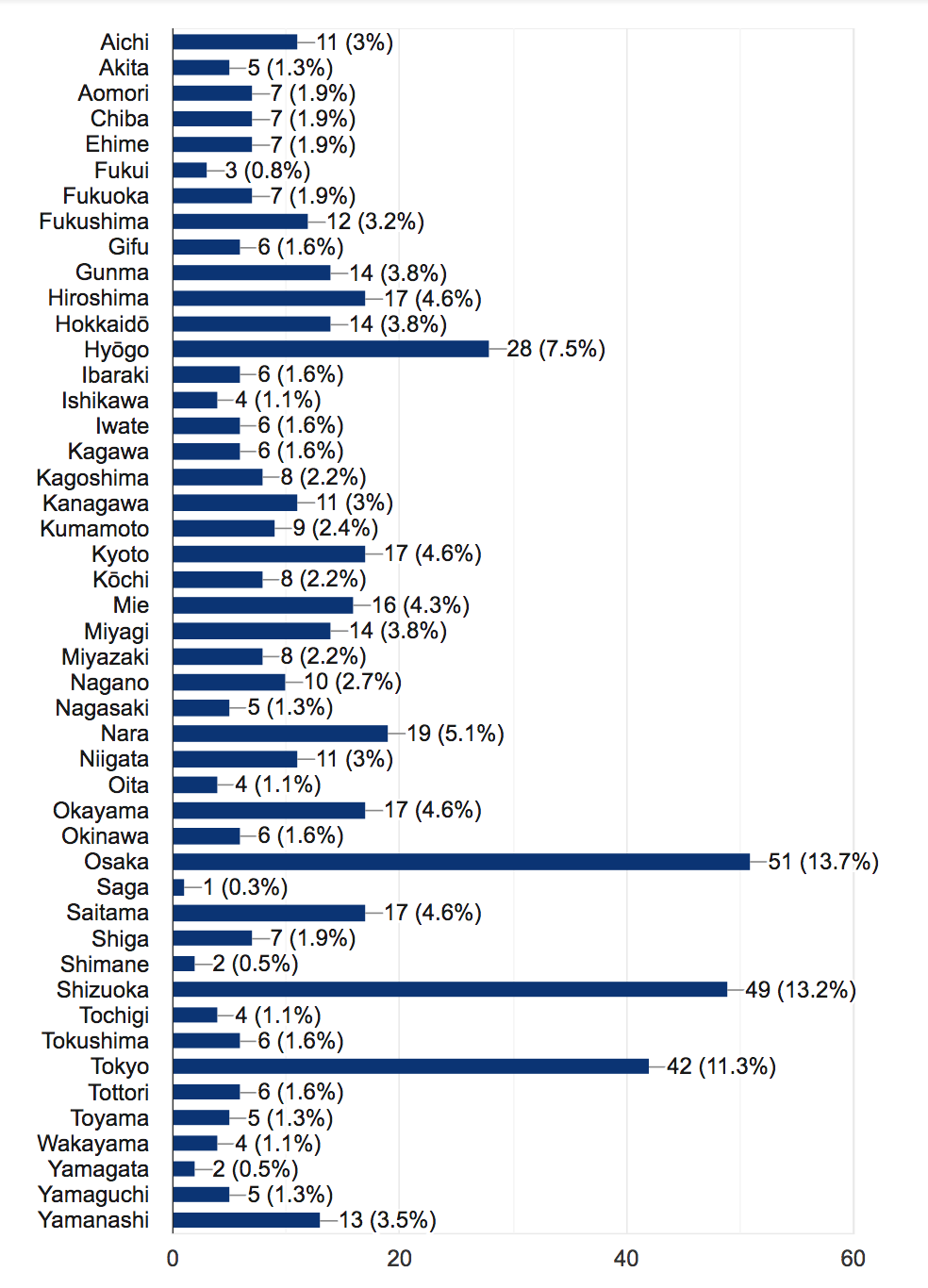
As a 5th-year ALT in the JET Programme, I have heard of countless horror stories from ALTs and have personally experienced some forms of harassment throughout my term. The prevalence of this phenomenon was shocking to me at first, and it inspired me to survey and interview ALTs and eikaiwa teachers about their experiences. 374 people responded to the survey, and 42 people participated in a follow-up interview (39 via Skype and 3 in-person).

Survey Data
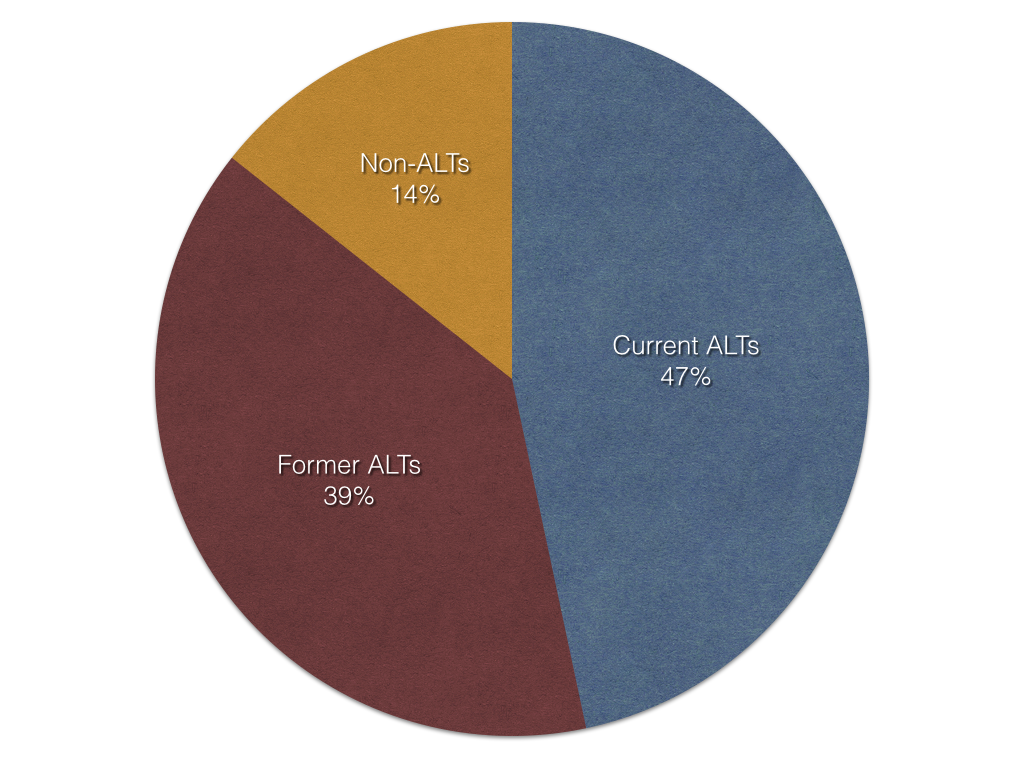
Participants' employment status

217 Current ALTs, 127 Former ALTs, 30 non-ALTs (NETs (Native English Teachers), eikaiwa instructors)

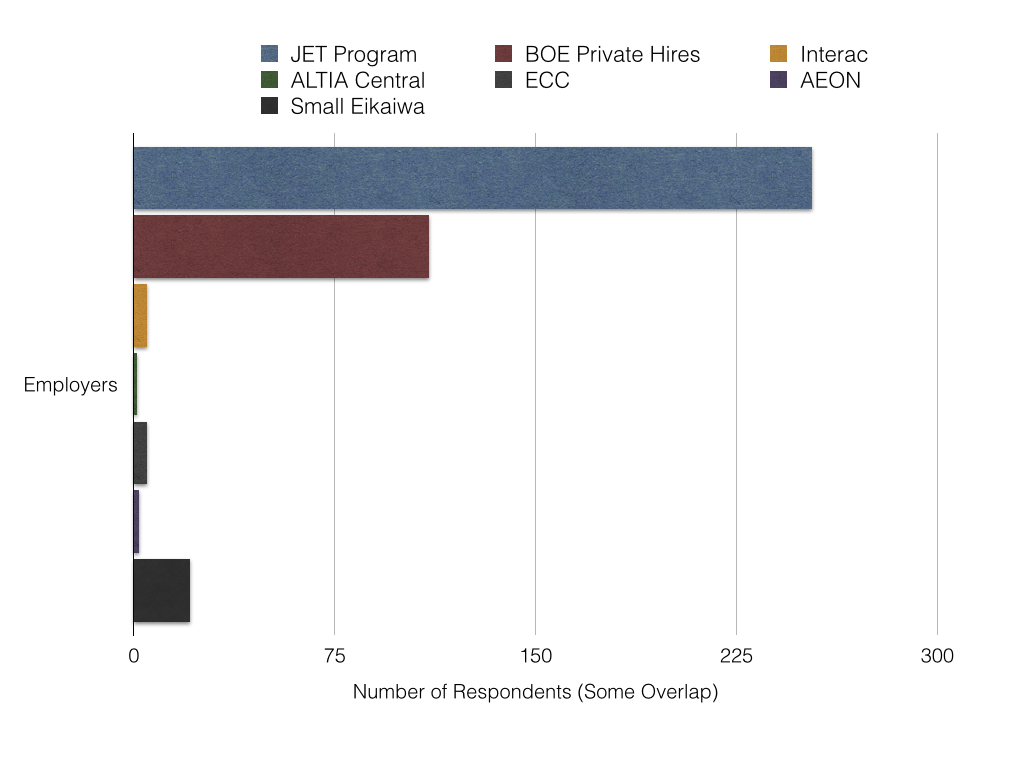
Participants listed by employer

130 JET Programme, 47 Private Hires by BOEs, 34 Interac, 5 ALTIA Central, 4 ECC, 2 AEON, over 20 worked for small eikaiwa (some worked for multiple employers over time)

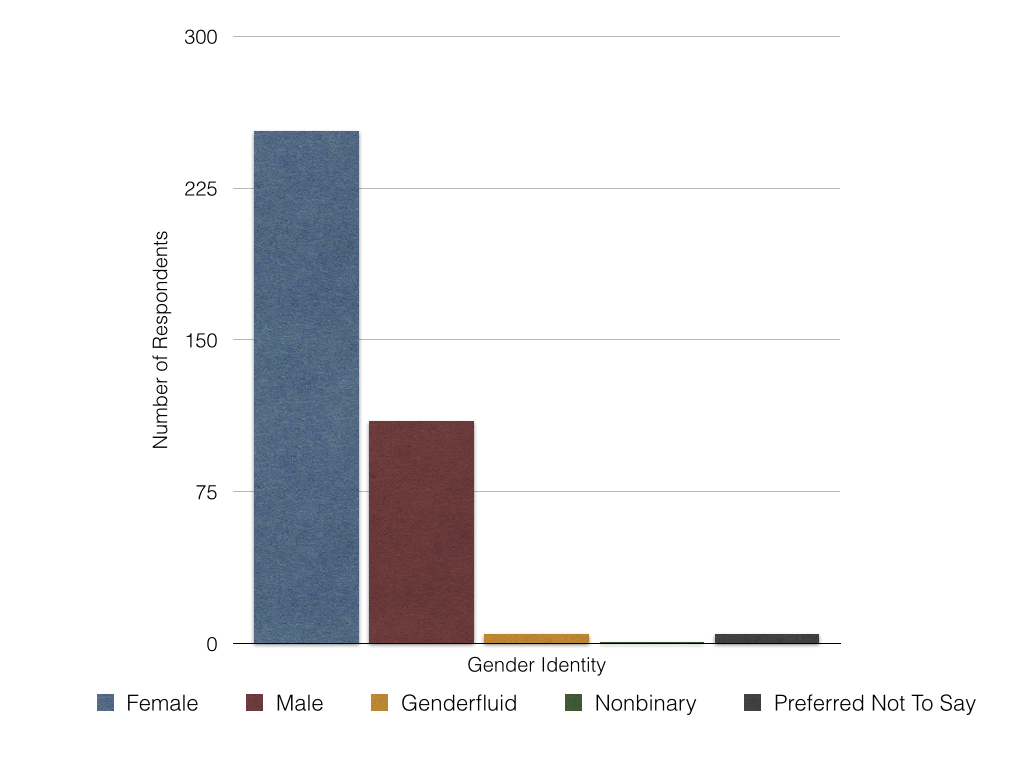
Participants listed by gender identity

253 Female, 110 Male, 5 Genderfluid, 1 Nonbinary, 5 Preferred Not to Say

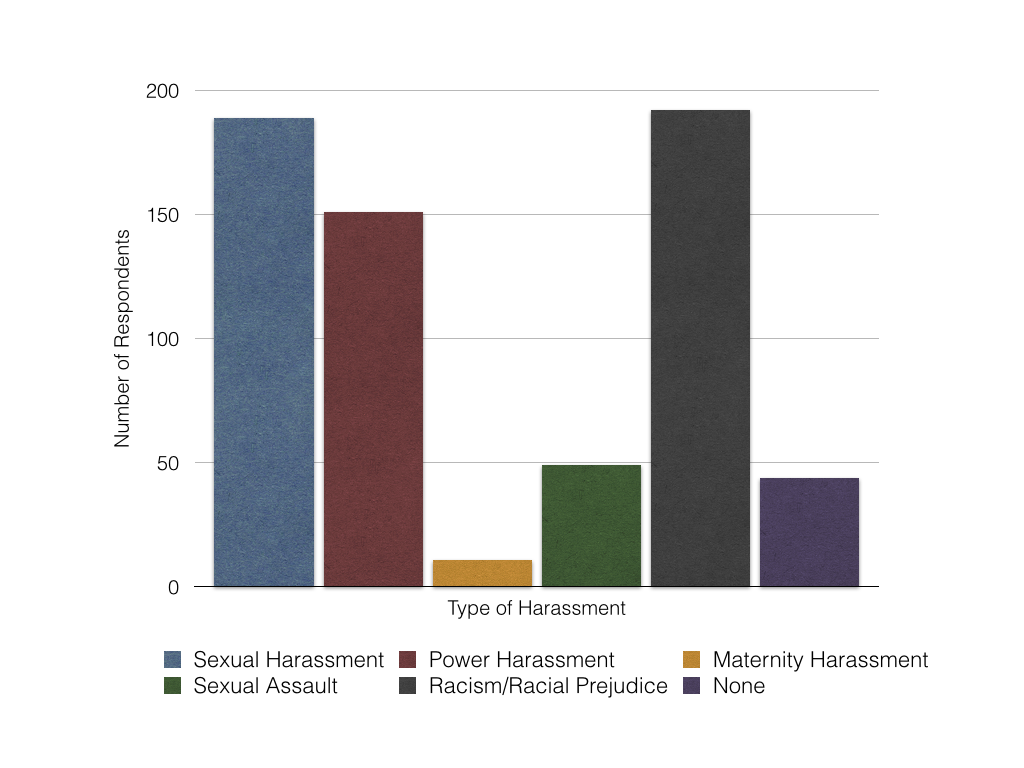
Type of harassment experienced by participants
Participants listed by location

Survey Findings:
Experiences with Harassment
Over 50% of the participants had experienced sexual harassment and racism, 39% power harassment (a kind of harassment that involves abuse of power/bullying against an employee’s subordinates), and 13.1% experienced sexual assault.

Other significant forms of harassment that the participants experienced included maternity harassment, stalking, microaggressions, xenophobia, and bullying.

The top two locations where they experienced harassment was at their schools (70%) and at Nomikai/Enkai (39.4%).

I also asked the participants about how they would address the issue if they experienced harassment. Multiple preferences were selectable.

The top 5 preferences were:
  • Friends (over 80%)
  • Spouses/Partners (37.2%)
  • Senpai [expats/foreign residents who have stayed in Japan longer] (36.1%)
  • Coworkers (31%)
  • Family Members (30.2%)

Less than 25% would reach out to their employers or BOEs, and less than 10% would reach out to a licensed counselor.

Experiences of Harassment:
Survey & Interview Responses
245 survey participants wrote about their experiences with harassment in Japan. Here are a few that represent what a majority of the respondents shared. There were also certain instances of harassment that would occur more frequently with some demographics than others (black women, Japanese-passing women, women of color, younger employees).

Sexual Harassment
Female ALT:
Students
I've been cat-called by students ("Nice hamstrings! Nice ketsu(ass)!"), experienced them performing a pantomime of groping breasts in front of me (while making eye contact and saying 'momi momi'), and smirk and mutter 'sex' under their breath every time they see me.

In regards to the cat-calling and under-the-breath 'sex' muttering, I did not bring this event to anyone's attention nor did I confront the students in question. The reason for this is because while I could identify the voice of the 'ketsu' offender, he is a known troublemaker in the 3rd grade which I don't teach anymore. Reporting him would not have reaped any improvement, so I just ignored it. With the 'sex' mutterer, I simply ignored him until he gave up.
The student who pantomimed the act of groping me was a 1st year, so I came down hard on him. I confronted him immediately after confirming that he was indeed being that rude, ordered him to do it again and gave him a good yelling-at. The next day, I reported it to his homeroom teacher and the head teacher of the 1st year. Their response was absolutely lovely and they helped me to sit down and have a discussion with him about why he thought that was appropriate, why it's bad, and if there were other members of his club who'd encouraged him to do it. The club's teacher was informed of the results and took appropriate action with the other club members.

Muslim ALT:
Coworker/Supervisor
In one case, a drunken coworker at enkais or on train rides home from town on weekends routinely would try to tell me that sexual harassment was okay in the US, make lewd gestures, and ask to touch my breasts. In other cases, my supervisor would obviously favor the other ALTs over me in group settings (offering them tea or having family dress them up in kimonos but telling me to get my own tea or that kimono wouldn't look good on me if I asked) and made repeated racist comments towards me (such as in my culture it's okay to be lazy but it's time to be Japanese, on the less severe end).

He also lied to me about my contract terms regarding emergency sick leave, called my PA (Prefectural Advisor) after speaking to an ER doctor while I was in critical care to say I was trying to get out of working after vacation, called me daily while I was in hospital demanding I give him an answer about when I'd be back or he would hire a new ALT and terminate my contract, made racist remarks when I had to stop kyushoku due to my health and allergies (namely saying all Muslims needed to just eat like normal people, despite this having nothing to do with religion), telling me 'losing weight by eating your own food won't make you sexy enough to get away with being lazy,' threatening me with firing if I wasn't 'mentally stable' when I asked about counseling after a family death, ordering coworkers not to help me get to work when I broke my leg to prove I was 'faking it' (I had to walk 2 hours each way on crutches til I healed), repeatedly coming to my home to criticize my work, tell me about neighborhood complaints I was not responsible for, and make racist remarks…

He also refused to sign part of my transfer request paperwork so that it wasn't processed, then told me two months after he was supposed to that because of that, my request was denied, I was out of a job, the After JET conference and appeal deadline had passed, and so had prime hiring period, and then he told me he had done so and told my coworkers not to be references for me if I asked because he wanted 'people like' me out of Japan and he hoped no other company would hire me. I've also experienced groping and sexual comments from strangers at social gatherings on a few occasions.

Power Harassment
ALT:
School Principal
The principal at my main school obviously had issues with me. She was a bully in general to the entire staff but I refused to go along with some of her more ridiculous demands so her attitude toward me changed. She would be condescending and call me out in front of staff. Made me so stressed that I almost wanted to quit and once it got so bad I almost left school in tears in the middle of the day. The fact that I am Asian (Chinese) and spoke Japanese definitely was a factor as I 'looked' Japanese but wasn't. Speaking to my colleagues confirmed this racial bias for me as my successor (non Asian) did not experience the same problems as me at all.

ALT:
Co-ALT, Older Coworkers
I felt that my ex-co-ALT used his position of relative superiority within the Japanese school system to belittle, dismiss, or undermine whatever I said to other JTEs (Japanese Teachers of English). For example, in front of me on a regular basis he would use Japanese to belittle or dismiss my ideas to Japanese colleagues. One of my JTEs is a retired and returned teacher who consistently uses low level power harassment to belittle me in front of a full class of students. IE, he will ask me grammar questions and if I do not respond exactly the way he expects then he will insult my ability to speak my native language to the students in Japanese, slamming doors in my face, etc.

ALT:
Supervisor, Older Teachers
The power harassment was from my immediate supervisor at my high school. It lasted 2 years, but the majority of the bullying occurred the first year because I was alone with her in an isolated office. It was a terrible experience. I was in touch with the JET who worked as ALT Coordinator at the BoE but he refused to help me. I had to lean on my boyfriend for emotional support and found that I was very depressed by the end of the year working with this person. She did so many mean and vindictive things to me.

After the first year working with her, I was able to get out of the office because a CIR at the BoE who I was friends with reported what I had told her about this woman to the BoE coordinator and he spoke with my vice principal and other teachers who immediately began helping me get out of the situation. They then watched to see what she would do and saw how vindictive and mean she was which supported my accusations. Honestly, the situation was dire from day one. But as soon as I moved things became immediately better for me. I found out also that she had a record of bullying at a previous school in her report. I just wish the JET ALT Coordinator had listened to me the first year instead of telling me I would just have to deal with harassment because that was the way this was handled. So terrible.

Please make certain the ALTs working in these positions are trained on how to deal with bullying of ALTs.

Male ALT:
Invasive Questions
I have been asked by senior teachers how big my penis is, how often I cheat on my wife, whether my children have big penises, whether being fat means I'm lazy, if all foreigners eventually get as fat as me, whether I'm ashamed of leaving work "so early" (ie. at the end of the workday), etc... Essentially, I have found my co-workers to often be extremely lacking in discretion when it comes to conversation, often resulting in racist statements, sexually inappropriate statements, or harassment based on my body size. I also find it extremely difficult to find many administrators or faculty who are willing to treat me or my fellow foreign teachers with professional respect despite often being more qualified and experienced than they are.

Male ALT:
Team Teaching
The teacher with whom I was working called me a baka gaijin in front of the students. The same guy also told the class my wife was ugly, while I was standing there. He seemed to think we were some kind of comedy double act where I was the fall guy for his jokes. I don't think he was being malicious. There is a common belief in schools in Japan that the foreigner in the class is going to be some kind of clown. That it's time to have fun and a bit of a laugh with the ALT/JET. I think he was just going along with that and got carried away. I let it go because, to tell the truth, he was the most approachable person in the school. And also, the school was still recovering from a former JET who had been a nightmare for the school (I met the guy and he was an absolute d**k). So, I didn't want to rock the boat. It never happened again with that guy. If it had of I would have done something about it.

Racism/Prejudice
Black ALT
As a tall, black woman in Japan, I am sometimes treated like a rare specimen by people and that leads to surprise, unsolicited touching, from touching my hair--once in an onsen when I was showering which made me feel the need to wash my hair again--to suddenly standing hip to hip with me to compare leg length to, one time from my students, touching my earlobes. My reaction for strangers is usually to stay calm and roll with it, sometimes with humor in the cases of leg comparing; sometimes going through the motions due to shock, as in the onsen; and sometimes scolding when it's my students touching my hair.
There was one time, though, I was changing in a locker room when, out of the corner of my eye, I saw someone reaching to touch my pant-less leg. I internally freaked out and flinched out of the way. Turns out, the woman somehow didn't think I was black and asked how I stayed so evenly tan. I had to inform her that I am a black woman and it's my normal skin color. I dunno why she felt the need to try to touch me, but I didn't ask and tried to get out the fastest I could.
I know that I'm a rarity in Japan and that most people I run into will never get to interact with a foreigner, let alone a tall, black one, so I try not to let it get to me. The TV blackface always makes me angry, though…

East-Asian Canadian ALT
I look like a Japanese person and I know Japanese...I get why I’m treated like a Japanese teacher. I had to learn how to “read the air” and communicate in subtle Japanese ways with my coworkers every day. Communication here is less direct than back home and in my family’s culture. Oh, I was once yelled at for not using keigo (honorific Japanese) on the phone. I just said “hai” to my coworker. He was older than me so he wanted me to be more formal. If I am doing something “wrong” with how I dress or talk it’s direct, but if it’s something like lesson planning it’s never really direct for me.

I have a co-ALT who is white and we’re told conflicting things at work all the time...I have to dress more conservatively and use nenkyu (paid time off) less often than her. I can’t dye my hair either even though she can have highlights and get compliments on them. On the other side of the coin, I can defend myself. The other ALTs in my city don’t know the language so they can’t speak up for themselves or know the system. I also had to step in for other ALTs when they would report chikan or other things. Their supervisors are very hands-off with everything so they are stuck with finding someone to interpret for them or support them in-person.
I’m a totally invisible foreigner outside of work. I like blending in, but it’s nice to be a special snowflake sometimes too. I see Japanese people and my students get easily enchanted by my co-ALT all the time like a celebrity. I tried explaining how differently I’m treated to my co-ALT and other JETs but I get the “ESID” mantra. It’s not different? It’s a common issue that comes from history. I know of lots of people in Japan who are anti-Korean and Chinese too. In my jikoshoukai [self-introduction] I told the class my family immigrated from China and the students said anti-Chinese comments. This was before they knew I spoke Japanese. I pretended not to understand so I could hear their honest opinions about China. The JTE told me to talk about Canada instead when I confronted her after the lesson. We couldn’t have a civil conversation with the homeroom.

Japan is not a perfect country. Canada isn’t perfect, either. Perfect countries aren’t real.

People here can discriminate and have double-standards so I wish the “Japanese mindset” or “not breaking the ‘wa’” wasn’t put on such a freaking pedestal by other gaijin here.

Filipina ALT
My English level always has room for doubt with my JTEs. I am from the Philippines and, well, English is the official language. I am also a certified teacher back in my home country. They asked me to change my accent and sound American, because it is the real English. I was hurt by their remarks about me and had my breaking points. I always feel like they would be happier with an ALT from North America. At one party with my senseis, they compared me to women at a Filipino pub near the party and asked me if I worked there after school. I stopped going to the parties but I have lunch with my supervisor sometimes. She also does not get along with the JTEs who gave me comments, but she told me that they were in charge of the department.

I don’t want to ask for a transfer because I’m worried about my problems repeating again and I want to stay. My Filipina-American friend also had the same problems in her school in a different part of Japan and I was surprised! Being American can’t protect you either. JET is a very famous and competitive program and it’s very hard to get this job. I thought the teachers would be more professional with the JET ALTs but I heard it’s not always true. In the classroom I like teaching my students and they give me so much pride. They are full of life and they accept me more so. The income is good and I have a lot of friends in Japan. Maybe I just have to pray more and make do.

-          A note from ALT training online’s David Hayter


If you have something 'ALT' to write about that hasn't been covered in these blogs, email me at alttoblog@gmail.com so we can work together and spread your story.

Don't have any ideas? We have a list of topics to write about that need a writer. Email in your interest to write and we can set you up. 

For upcoming blogs see the blogs tab here:  http://www.alttrainingonline.com/blog.html